Phillips-Treatment, Therapy, and Alternatives
Treatment, Therapy, and Alternatives for Heroin
When it comes to the topic of heroin use, people typically mention how it impossible to stay clean since this is a highly addictive substance. Unfortunately this can be true for many people who are currently facing a heroin addiction and in order to get the most effective help as possible, there is the need for professional help. When receiving professional help, there can be a variety of effective treatments but there are two particular approaches that are commonly used for heroin use disorder.
 |
| https://www.healthyplace.com/sites/default/files/images/stories/seroquel/8-drug-addiction-treatment-healthyplace.jpg |
Pharmacological Treatment (Medications)
Scientific research has established that pharmacological treatment of opioid use disorder increases retention in treatment programs and decreases drug use, infectious disease transmission, and criminal activity (National Institute on Drug Use, 2021). Since heroin is a an opioid which people can also become addicted too, there can be struggles with the withdrawal process. During withdrawal of opioids such as heroin, there are symptoms that one can experience (pain, diarrhea, nausea, and vomiting). These symptoms can become severe when trying to quit and this is where medications come into the equation in order to help with detoxification.
Medications can be helpful in this detoxification stage to ease craving and other physical symptoms that can often prompt a person to relapse (National Institute of Drug Use, 2021). The FDA approved lofexidine, a non-opioid medicine designed to reduce opioid withdrawal symptoms (National Institute of Drug Use, 2021). With there specific medical needs of a patient and other surrounding factors, there are particular medications that may be distributed to meet that person's medical needs.
Medications include:
Methadone: Methadone is taken orally so that it reaches the brain slowly, dampening the "high" that occurs with other routes of administration while preventing withdrawal symptoms. Methadone has been used since the 1960s to treat heroin use disorder and is still an excellent treatment option, particularly for patients who do not respond well to other medications (National Institute of Drug Use, 2021).
Buprenorphine: Buprenorphine is a partial opioid agonist that relieves drug cravings without producing the "high" or dangerous side effects of other opioids.
Naltrexone (Vivitrol®): An injectable opioid agonist that blocks the action of opioids, is not addictive or sedating, and does not result in physical dependence. This can be administered once a month to help improve compliance by eliminating the need for daily dosing (National Institute of Drug Use, 2o21).
Behavioral Therapy
Behavioral therapy is the second form of treatment that has been researched as effective for opioid use disorder which can include the use of heroin. The purpose of implementing behavioral therapy into a treatment plan for a user is to further explore who they are as an individual to seek the story behind their use. Typically, as part of a heroin addiction treatment program, the addict’s psyche is addressed to understand why and how they became addicted to the drug and how to be free of it (Lesser, 2021).
In private, group, or family therapy, the recovering addict can identify and eliminate the behaviors that forced her to seek heroin in the first place by eliminating emotional, psychological, and physical things that contributed to the addiction (Lesser, 2021). Being more specific, there is the option of having a patient participate in Cognitive Behavioral Therapy to explore the mental stability surrounding one's addiction.
For example, someone who is dealing with depression and currently using heroin may benefit from this form of therapy because they are able to make sense of the mental reasons behind their substance abuse. A treatment for chemical dependency is known as cognitive-behavioral therapy, which not only helps patients reduce their drug use or heroin addiction, but also teaches them skills to deal with the day to day challenges to stay sober without being bound to a drug (Lesser, 2021).
Overall, this gives the patients the ability to take control of their lives again and to make informed decisions about their health and well-being in the future (Lesser, 2021). This then shows them new, healthier ways to confront the problems they used to avoid by indulging in heroin (Lesser, 2021). In other words, patients are having their stories heard to better understand what has led them to addiction and come to the realization that behind their addiction there is a story.
 |
| https://davidflavintherapy.co.uk/wp-content/uploads/2020/02/irrational-rational-400x400-1.jpg |
Rational Emotive Behavior Therapy
REBT is another form of therapy that could be beneficial for someone who is suffering from substance abuse such as heroin because this focuses on rational thinking. REBT helps clients identify, challenge, and replace their destructive thoughts and convictions with healthier, adaptive thoughts (Miller, 2022).
Empirical studies demonstrate that this process incites emotional well-being and goal achievement. It helps patients understand their own thoughts and then helps to develop better habits and thinking in more positive and rational ways and gain healthier emotions (Miller, 2022). Having the ability to look at things in a more positive perspective can potentially help them avoid wanting to choose destructive behaviors such as drug use as an escape from their reality. Typically people who use drugs such as heroin are looking for that euphoric feeling to help escape from their negative thoughts temporarily, so having this form of therapy can help set those negative thoughts and emotions aside.
Holistic Approach
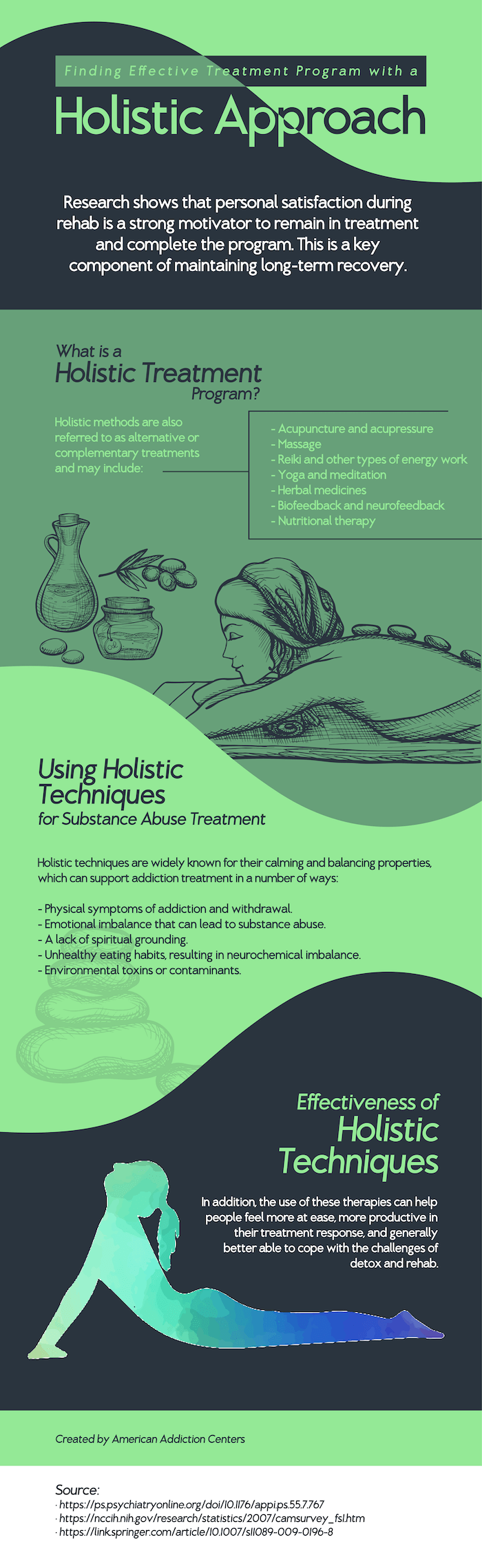
Taking an holistic approach with someone who is trying to get help with their substance disorder can be considered as an alternative for treatment. This approach is incorporated in rehab programs as an opportunity for patients to better attend to both their psychological and physical needs.
Approaches such as yoga, meditation or massage therapy can be considered as holistic treatment for patients that may not want to take the conventional route with treatment. The biggest concern for patients who are trying to get back on the right path is the level of comfortability when seeking out treatment and some people may feel more comfortable with in the beginning of treatment.
In addition, the use of these therapies can help people feel more at ease, more productive in their treatment response, and generally better able to cope with the challenges of detox and rehab. For these reasons, holistic practices can be a positive complement to the more evidence-based modalities (Hardey, 2022).
 |
| https://admin.americanaddictioncenters.org/wp-content/uploads/2019/04/Holistic-01.png |
References
Hardey, S. (2022, March 3). Holistic addiction treatment in Drug Rehab - is it effective? American Addiction Centers. Retrieved April 15, 2022, from https://americanaddictioncenters.org/rehab-guide/holistic
Lesser, B. (2021, March 24). Heroin Addiction Treatment. Dualdiagnosis.org. Retrieved April 15, 2022, from https://dualdiagnosis.org/heroin-addiction-treatment/
Miller, L. (2022, February 21). Substance Abuse Treatment Types & Therapy Programs Near Me. American Addiction Centers. Retrieved April 15, 2022, from https://americanaddictioncenters.org/therapy-treatment
National Institute on Drug Abuse. (2021, April 13). What are the treatments for heroin use disorder? National Institutes of Health. Retrieved April 15, 2022, from https://nida.nih.gov/publications/research-reports/heroin/what-are-treatments-heroin-use-disorder


Hi Ajanae, I have heard tons of different ways that an individual can get treatment for heroin addictions. Methadone can be helpful and effective for treating addiction. Methadone can be used to prevent a relapse. People who take methadone are often able to reduce their use of alcohol and other substances. Once people take methadone, they will have to take it long-term. Methadone fills the same opioid receptors in the brain that heroin does. I think you did a great job explaining different forms of treatment for heroin. I like how put together your blog is!
ReplyDeleteHi Ajanae, awesome job! I really liked reading your post! You had a lot of beneficial treatment options and information on all of the different options which was really helpful. I also think you explained everything very well, which was nice for the reader. My favorite part about your post was when you listed the holistic approaches. Posting the picture with all the holistic treatment information was super nice and I liked all the different treatment options it listed within the holistic approach. I, personally, am one who enjoys the holistic approach and looking at helping my body, using those kinds of treatments. For example, yoga is such a healing, yet strengthening way for one to help mend their mind, body, and soul. I do yoga almost daily and if I don't, I can feel it within my body, which is weird and I've never had that happen before. Again, really nice job! :)
ReplyDeleteAjanae, my topic is opioids, so my research is very similar to yours. I also saw that the three medications and behavioral therapy were the two most commonly used treatment options. I did not, however, come across Rational Emotive Behavior Therapy specifically. It seems like the best type of behavioral therapy for this specific issue and I love the idea of there being so many types to try. If one type does not work, there are so many to delve into. Behavioral Therapy is such a broad term encompassing so many forms of therapy that all use the same basic treatment tactic. I also did not specifically see the Holistic Approach. I saw many descriptions of the same thing, but not that term, so I am glad that you found it so we can both have it in our arsenal to use in the future and to finish off this class.
ReplyDeleteAjanae,
ReplyDeleteYour blog was very nice to read as I enjoyed the graphics along with learning all of the information you provided for treatment, therapy, and alternatives. I think this is great information to learn as there is currently a opioid/heroin epidemic occurring in areas throughout Michigan. Knowing this information as having it available to help people when they feel ready to overcome their addiction, I can now provide individuals with information for treatments and therapy. I think that comorbidity is prevalent with individuals dealing with addiction, so I found the therapy section of you blog very interesting. Knowing there are many avenues that individuals can try to help them through their addiction is refreshing as it has been proven that not all treatments will work for everyone and it is very important to meet the addict where they are. Thank you for providing wonderful information as well as having great graphics along the way.