Phillips- Current Events-Heroin
Users warned about bad heroin after spate of deaths
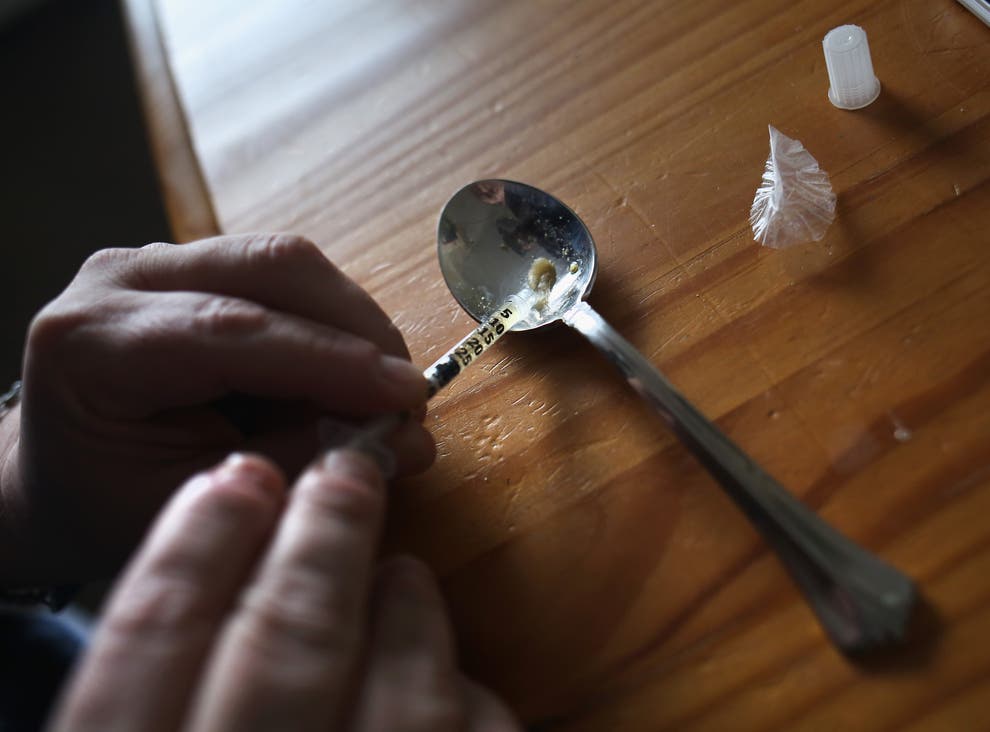 |
| Getty Images/ Independent.co.uk |
There has been an article written on August 17th of 2021 by the Independent News UK which states that there has been a surge of fatal overdoses in England, which is urging public health officials to warn drug users of the substance related deaths. The article titled, "Users warned about bad heroin after spate of deaths", touches on the issue of how the highly addictive drug may have a possible link between a spate of fatal overdoses and being mixed with a "potent and dangerous synthetic opioid" (Taylor, 2021). Within the article, there is the mention that 46 poisonings have resulted in 16 deaths including reports in South London, the South East, South West, and East of England (Taylor, 2021). While the health officials of England also known as Public Health England (PHE) are continuing to investigate the link of heroin and a possible synthetic opioid, they have been warning individuals using drugs to be "extra careful" when being in contact with drugs such as heroin. There has been the suggestion of testing small amounts if one were to use drugs just for precautionary measures in regards to the overdoses. A statement issued by Rosanna O' Connor who is the director of drugs, tobacco, and justice at PHE mentioned, "We are urging drug users to be extra careful following reports of a sharp rise in the number of overdoses potentially connected to heroin, tragically with some deaths", (Taylor, 2021). Ms. O’Connor added that all drug users are advised to seek support from local services, who have been made aware of the issue (Taylor, 2021). In other words, the best option health officials and police are looking into when trying to resolve the surrounding usage of opioid drugs such as heroin is to encourage drug users to be as careful as possible when using and also encouraging users to contact the police or local services when offered drugs. While they are not able to keep track of every individual who is using heroin or other drugs, they believe spreading the news of the overdoses and encouraging others to reach out for help can be a start in helping decrease the overdoses and hopefully the use of this drug in general.
Further Awareness
The information presented within this article is essential to share with others because it helps brings more awareness to the surging drug epidemic, more specifically the consequential effects when discussing the harsh reality of using addictive drugs such as heroin. While this news article reported on the use of heroin within England, it is still valuable information to obtain because just as this epidemic is continuing in America, there is the unfortunate reality of people from other parts of the world being involved with this substance. If one were to look at the statistics for heroin overdoses in places outside of America such as England there have been a rising number of overdoses due to poisoning by opioids such a heroin. For example, a study done in England regarding fatal opioid overdoses during and after a hospital admission included results of 13,609 deaths between January 1, 2010 and December 31, 2019 among individuals aged 18 to 64 (Lewer et al., 2021). Researchers also discovered within this study that hospital patients who use illicit drugs report undertreated pain and opioid withdrawal, and patients have overdosed in hospital toilets and car parks while also discovering people who use illicit drugs such as heroin need extra support when being discharged from the hospital. These few discoveries are an example of why bringing this information to light is essential because it appears that there seems to be an increase with heroin use and behind that use, there is usually a story.
Prevention & Intervention
As mentioned earlier, there appears to be an increase in the use of opioid drugs such as heroin and being that these are highly addictive substances, it is apparent that there needs to be more done regarding prevention and intervention. With there being fatal overdoses from this drug in the U.S. and in other countries such as England in individuals ranging from teens to the elderly, there may need to be more effort put into the background of these individuals. There are several factors that can play a role in why one may become addicted to heroin such as environmental factors, genetics, psychological issues, etc. Heroin use can be considered not only just a social issue but also a cultural issue, and a psychological issue due to the various factors one may obtain surrounding their use. Interventions that reduce the risk of fatal overdose, such as opioid agonist treatment and overdose response training with take-home naloxone (an antidote for opioid overdose), may be beneficial when provided in the hospital. Interventions could start within hospital since this is a setting that people may have the open door to switching to heroin once they are unable to get ahold of prescriptions. Interventions that reduce the risk of fatal overdose, such as opioid agonist treatment and overdose response training with take-home naloxone (an antidote for opioid overdose), may be beneficial when provided in the hospital (Lewer et al., 2021). Hospitals may need to improve training related to addictions and develop policies to implement these overdose reduction interventions (Lewer et al., 2021). Overall, this could be a start in helping bring the much-needed prevention for drug users that may not know where to turn, but there needs to be more effort put in from places such as the hospital and so forth in order to help decrease the number of heroin usage.
References
Lewer, D., Eastwood, B., White, M., Brothers, T. D., McCusker, M., Copeland, C., Farrell, M., & Petersen, I. (2021, October 5). Fatal opioid overdoses during and shortly after hospital admissions in England: A case-crossover study. PLOS Medicine. Retrieved February 18, 2022, from https://journals.plos.org/plosmedicine/article?id=10.1371%2Fjournal.pmed.1003759#sec008
Taylor, J. (2021, August 17). Users Warned About Bad Heroin after Spate of Deaths. The Independent. Retrieved February 18, 2022, from https://www.independent.co.uk/news/uk/home-news/heroin-drugs-overdoses-deaths-england-b1904095.html


Hi A’janae, great job on your blog! I thought the article you shared was really interesting and I also liked that it was about another country, outside of the U.S. I think it is really important for people to understand that opioid crisis and heroine epidemic is all over the world, not just in the United States. I was shocked by a lot of the statistics you shared. When you talk about fatal opioid overdoses occurring before and after hospital admission was incredibly sad. Learning that these patients reported being undertreated with their pain and withdrawal and then picturing someone overdosed in a hospital bathroom stall is frightening. It also makes me tremendously sad because we think hospitals are a safe place, where we are able to get help and be taken care of. Sadly, this is not the case in other countries. I liked how you also mention, within your prevention section, that hospitals could provide an intervention for an individual and/or that hospitals could improve training related to addiction. I think both of these thoughts are great ideas and absolutely ways to help prevent future cases.
ReplyDeleteHi Ajanae'! First, I wanted to thank you for such a well written blog that was very informative on the heroin epidemic that is happening globally. You did a great job bring issues to the surface about training and intervention. I agree, there should be training in place for patients released from the hospital that were given opiates as well as an individual that is addicted. "We’ve learned that certain places are conducive to engaging patients in treatment. One of them is the ER. The other is the criminal justice system. We need to grab those opportunities and offer patients effective treatment when they’re ready" (Vestal, C. (2018, September 21). Many individuals that are ready to get clean are not able to do so as treatment may not be readily assessable at that moment. There is a drug that can be administered in the ER called buprenorphine which can help treat opioid use disorder. There are setbacks that ER are seeing with staff that takes this possibility away from users that are ready to get clean. “Most emergency physicians don’t have a buprenorphine prescribing license, and Oros said they aren’t willing to complete the eight hours of clinical training required to get it” (Vestal, C. (2018, September 21). I am hopeful that hospitals will take the time to help individuals that come to them for help, instead of giving them information to other local treatment options.
ReplyDeleteReference: Vestal, C. (2018, September 21). Most hospital ers won't treat your addiction. these will. The Pew Charitable Trusts. Retrieved February 21, 2022, from https://www.pewtrusts.org/en/research-and-analysis/blogs/stateline/2018/09/21/most-hospital-ers-wont-treat-your-addiction-these-will